The Cup That Starts the Sun
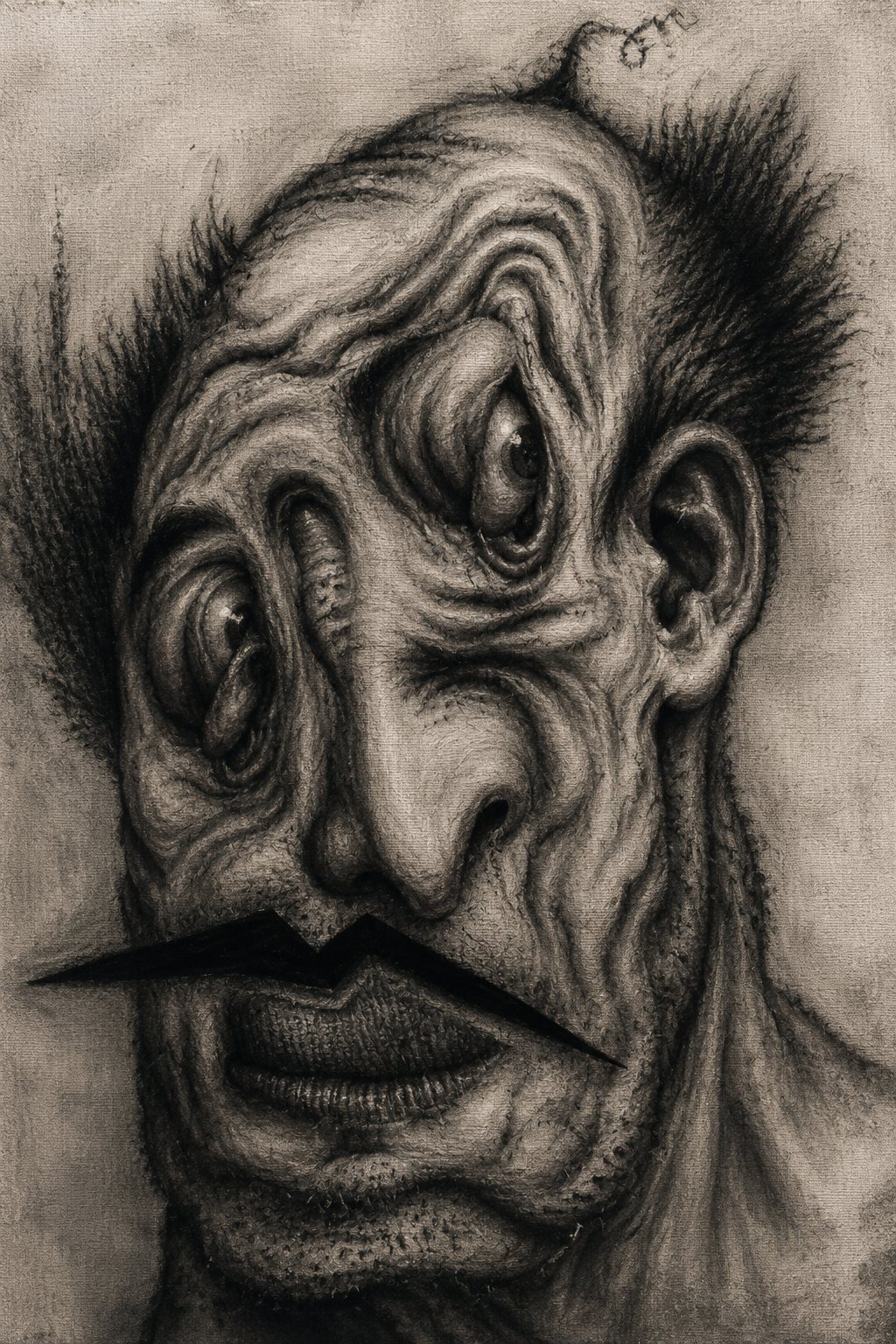
The tea pan is sitting there like evidence.
Not grand evidence. Not the bloody knife in a detective story. A more Bengali sort of evidence. Small. Blackened. Slightly bent. Still accusing. Its handle points at me from the corner of the room with the tired disappointment of a retired schoolmaster who has seen three generations of boys become clerks, diabetics, frauds, drunkards, tuition teachers, and WhatsApp nationalists.
I am on the bed.
The cup is empty.
The morning has not officially begun.
This is the entire scandal.
A middle-aged Bengali man in the southern shanty edges of Calcutta cannot get up and make tea.
You may think this is laziness.
You would be wrong, but naturally. Laziness is a respectable vice. Laziness has leisure in it. Laziness wears a lungi, scratches itself, and says, “Later.” Depression is different. Depression is when the word “later” becomes a government file, tied with red ribbon, sent to the wrong department, eaten by silverfish, and then returned to you after six years because page three does not have a signature.
From outside, nothing is happening.
A man is lying down.
That is all.
No orchestra. No lightning. No slow-motion collapse. No Greek chorus enters from the left wearing sandals and announces, “Behold, citizens, the ruined son of Bengal has been defeated by one cup of cha.”
Calcutta would not notice anyway. Calcutta is busy doing Calcutta. Someone is frying luchi in oil old enough to remember Jyoti Basu. Someone is honking at a cow with the seriousness of a military campaign. Someone is arguing over five rupees as if the future of parliamentary democracy depends on it. A boy with gelled hair and a mysterious income is passing on a scooter. A hawker is arranging brinjals with more courage than I have arranged my life. A news anchor somewhere is warming up his patriotic indigestion for the evening.
The city has started.
I have not.
Inside, however, there is weather.
Not ordinary weather. Not the kind the phone app explains with neat little icons, as if clouds were obedient clerks. Inside me there is a Kalbaishakhi forming. A Nor’wester. That famous Bengal afternoon tantrum of black sky, flying dust, electrical grumbling, mango leaves, loose plastic chairs, and aunties shouting from balconies as if they personally manage the atmosphere.
Except mine arrives at 8:12 in the morning.
No clouds.
No rain.
No cooling wind.
Only the pressure drop of thought.
Suddenly the internal sky darkens. Old invoices begin to fly like tin roofs. Shame starts flapping from a wire. My mother’s frailty hangs in the mind like wet laundry that will never dry. Tooth pain sits in the gum like a minor official waiting for a bribe. Work not done. Payments not received. Age advancing with the quiet confidence of termites. The future arrives at the door with a clipboard and says, “Please sign here for another delivery of nothing.”
And still the tea is unmade.
Now science enters, wearing polished shoes and holding a clipboard of its own.
Caffeine is a small legal stimulant, one of civilization’s more successful frauds. It does not give you energy exactly. It blocks a chemical called adenosine, which builds up in the brain and whispers, “Sleep. Slow down. Stop pretending you are the Napoleon of spreadsheets.” Caffeine puts a finger over that whisper and says, “Not now, dada. Office ache.”
This is why morning tea is not a beverage in my room.
It is not culture.
It is not nostalgia.
It is a ceasefire.
A small brown peace treaty between neurons, milk, sugar, tea dust, and one battered human being who has to persuade his nervous system that another day of being himself is technically survivable.
Without tea, the complaint counter opens.
First the headache comes politely. A small knock on the left temple.
Then it becomes less polite. A municipal hammer. Somewhere behind the eye, a road is being widened without permission.
The body knows the procedure. Feet down. Sit. Stand. Walk to the corner. Take the pan. Rinse it. Water. Tea dust. Ginger, if the ginger has not become a fibrous little corpse in the bowl. Milk. Heat. Wait. Watch the foam rise like a small brown revolution. Lower the heat. Pour. Sip. Rejoin the species.
A child could do it.
A depressed adult cannot.
That is the filthy little joke. The smaller the task, the larger the humiliation.
Nobody gives you a prize for making tea. Nobody says, “Excellent work, Suvro, you have stood upright near a sink.” There is no certificate for brushing your teeth before noon. Though there should be. The government gives awards for enough things. Surely one sweating minister can be made to stand in line and hand medals to the clinically depressed, the anxious, the bipolar, the lonely, the broke, the widowed, the elderly, the overmedicated, the half-employed, and all those people for whom a teaspoon sometimes becomes the Himalayas.
People who have not been inside this condition think depression is sadness.
It is not.
Sadness is a puddle after rain. You can step in it, swear, shake your sandal, and continue.
Depression is when the ground itself turns into wet cement.
You lift one foot, and the whole planet comes up with it.
This is difficult to explain to people who say helpful things like “Just get up,” or “Think positive,” or “Go for a walk,” or the great Bengali classic, “Moner jor lagbe,” as if the mind is a ceiling fan with a loose regulator. Turn knob. Speed three. Problem solved.
If only.
The mind is not a ceiling fan. It is more like an old Calcutta house where every tenant has illegally extended into the courtyard. The anxiety family has built a tin shed. The regret family has occupied the staircase. The shame family dries clothes across the entrance. The memory family has kept one dead uncle in a room and refuses to discuss it. Somewhere, the planning department is trying to hold a meeting, but the microphone does not work and the tea has not arrived.
I have read enough science to know that the body is not a noble instrument.
People praise the body too easily. Temple of the soul, they say. Magnificent machine, they say. I have lived in one for fifty-one years, and I must report that it is closer to a rented house with damp walls, bad wiring, suspicious plumbing, and a landlord who insists the cracks were always there.
The brain is not much better. That proud three-pound cauliflower likes to imagine itself as a philosopher. In reality it is often a fish market with electricity. One part wants sleep. One part wants money. One part remembers America. One part remembers failure. One part wants to write. One part wants to disappear under the sheet and become an unpaid pillow. One small clerk in the front of the brain is trying to make a plan, while the fear department runs through the corridors shouting, “Poverty! Illness! Old age! Tooth decay! Fraud! Failure! Repeat failure!”
And in the middle of this indoor riot, the tea pan waits.
There is a strange insult in being defeated before breakfast.
The day has not even shown its teeth. No client has delayed payment yet. No landlord has appeared. No doctor has prescribed a test priced like a minor appliance. No relative has said something poisonous in the mild tone Bengalis reserve for social surgery. No form has asked me to prove my existence with three photocopies and a passport-size photograph. Yet the storm is already here, rattling shutters from inside.
A real Nor’wester at least has manners.
It announces itself.
The sky goes black like someone has burnt the afternoon. Trees bend. Dust rises. People run to rescue laundry, schoolbags, plastic stools, children, chickens, and whatever else is light enough to reveal the truth about ownership. Then comes rain. Big drops. Hard drops. The smell of wet earth rises from the road, and for two minutes even Calcutta looks washed, like an old man who has finally agreed to bathe.
My storm gives nothing back.
No rain.
No cooling.
No visible drama.
Only the silent cyclone of worry: unpaid bills, unfinished work, the frail mother, the broken tooth, the shrinking body, the mirror becoming an unfriendly government notice, and the absurd fact that life still expects punctuality from a man who cannot yet manufacture tea.
This is where people misunderstand illness. They imagine suffering as a large event. Hospital bed. Dramatic diagnosis. Family members whispering outside. A file. A scan. A specialist with expensive shoes.
But often suffering is smaller.
A cup not made.
A face not washed.
A phone call not returned.
A toothbrush avoided.
A curtain not opened.
A pan sitting three steps away as if it were on the other side of the Hooghly.
And the shame is not small. The shame is huge, because the task is tiny.
You cannot say, “I failed to climb Kanchenjunga.”
That would have a certain dignity.
You say, “I failed to boil water.”
This is harder to put on a resume.
Years ago, in America, I could sit inside complicated systems. Hospitals, research data, code, messy databases, clinical forms, bad interfaces, ambitious meetings, the whole circus. I could understand pipelines that began in one machine, limped through another, and died mysteriously inside a reporting table with the innocence of a murdered goat. I could troubleshoot. I could explain. I could build. I could survive airports, deadlines, winter, long drives, and people who said “circle back” without shame.
Now, some mornings, I bargain with a bedsheet.
This is not a fall in the dramatic sense.
It is more like slow seepage. A roof does not always collapse with thunder. Sometimes it only leaks, one brown drop at a time, until the bucket becomes part of the furniture.
The British would appreciate the irony of the tea, I think, if irony did not require self-awareness.
Tea traveled through empire with the innocence of a knife. Chinese trade. East India Company greed. Assam plantations. Ships. Taxes. Clerks. Laborers. Advertisements. Then trains, offices, kettles, canteens, para addas, exam nights, hospital waiting rooms, funeral mornings, and finally this small room in South Calcutta where one failed mammal needs a colonial-botanical stimulant to restart the sun.
History ends in my cup.
Or, on bad mornings, history refuses to boil.
The funny thing is that even when the mind is trying to become furniture, the body keeps sending other memos from the basement.
Hunger.
Bladder.
Itch.
A sudden stupid desire.
Some reminder that the organism has not read the room.
You are lying there with headache coming, no tea, no clean face, no great income, no heroic future, and the body says, in effect, “Sir, minor departments are still open.”
This is why I distrust philosophies that praise the body too quickly.
The body is not a temple.
It is a cooperative housing society with leaks, disputes, unpaid maintenance, and one secretary who has lost the keys.
Still, the body sometimes saves you by being vulgar.
The bladder becomes more persuasive than hope.
The headache becomes louder than despair.
Some insect of self-preservation crawls out from under the fridge and pushes one leg toward the floor.
The floor receives the foot without applause.
This is important. The world does not clap when you resume being minimally functional. The crows do not pause. The milk packet does not salute. The neighbor does not lean out and say, “Well done, middle-aged man, you have re-entered the republic of the vertical.”
No.
You stand.
You wobble slightly.
You walk to the pan.
Water falls.
Tea dust darkens the little boiling pond.
Milk clouds it.
The foam rises too fast, because even tea has ambition.
You lower the heat just in time, or not. Sometimes it spills. Let it. Many empires have ended more foolishly.
Then the cup is filled.
The first sip is too hot.
Of course it is.
After all this philosophy, history, weather science, colonial trade, neuroscience, municipal despair, and one-man civilizational rescue mission, I burn my tongue like an impatient idiot.
And that, strangely, is when the morning begins.
Not happily.
Not bravely.
Not with the sudden music of recovery.
Only with hot tea entering a tired Bengali body while the invisible storm continues to uproot trees no one else can see.
Some days that is the achievement.
Not peace.
Not dignity.
Not triumph.
Just this: the cup is no longer empty, the sun has been persuaded to rise, and the small blackened pan has stopped accusing me for the next few hours.